

What Wood is Best for Laser Cutting?
So, you’ve got your laser cutter humming, or maybe you’re just thinking about pulling the trigger on one. Either way, you’re probably staring at a pile of wood scraps wondering, “Why did that expensive piece of hardwood just turn into a bonfire, while that cheap scrap cut like butter?”
I’ve been there. It’s frustrating.
Not all wood behaves the same under a laser beam. In fact, choosing the wrong material is the fastest way to ruin a project (or your air quality). But when you pick the best wood for laser cutting, magic happens. You get those crisp, dark engravings, smooth edges, and that satisfying "snap" when you pop a piece out of the sheet.
In this guide, we’re going to ditch the guesswork. We’ll look at the science of density, the reality of burn marks, and exactly which woods deserve a spot in your workshop.
What Makes Wood Good for Laser Cutting?
Before we start naming names, we need to understand the "why." You might think all wood is the same, but a laser cutter sees the world very differently than a saw blade.
Here are the core properties that matter:
Density: The denser the wood, the more energy the laser needs to penetrate it. However, super dense woods can sometimes burn rather than vaporize cleanly.
Resin Content: This is a big one. Woods high in resin (like Pine) tend to burn unpredictably, creating sticky residue on your lens and messy, uneven edges .
Grain Consistency: Tight, even grain (like Maple or Birch) engraves like a dream. Wild, open grain can cause the laser to skip or create blotchy contrasts.
Glue Composition (for Plywood/MDF): The glue used to hold the layers together matters. Some glues vaporize cleanly; others turn into a sticky, charred mess.
Simply put: Low resin + consistent density = Winning combo.
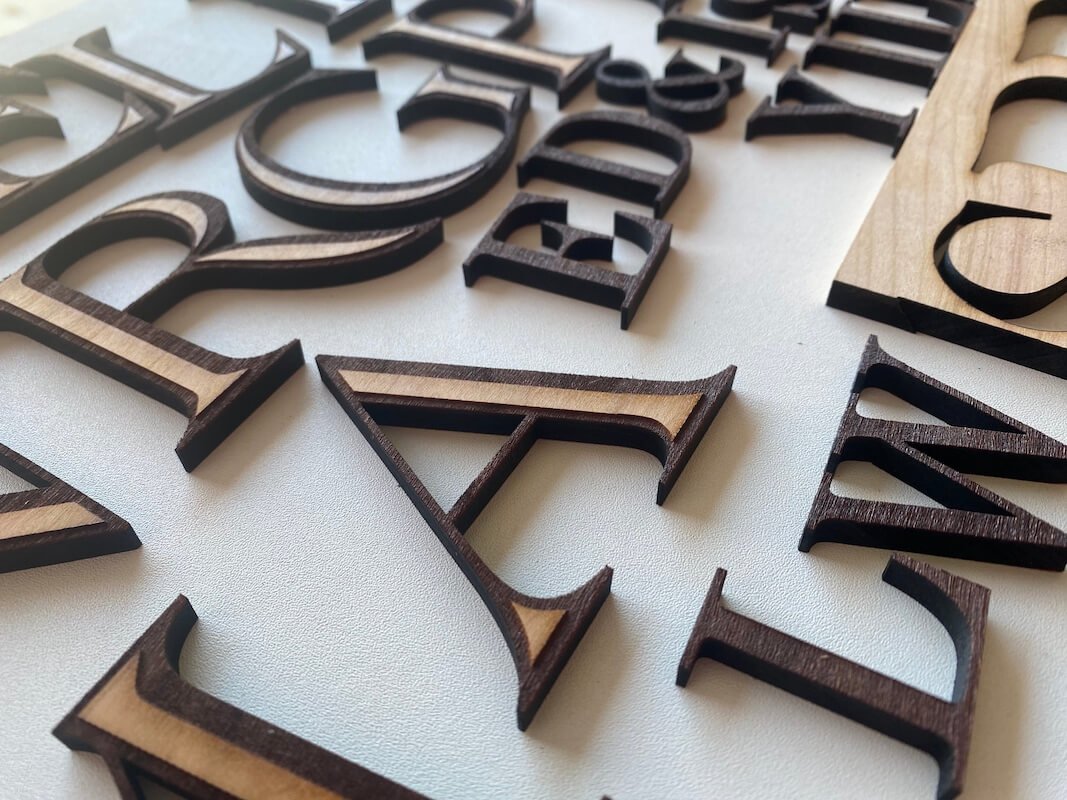
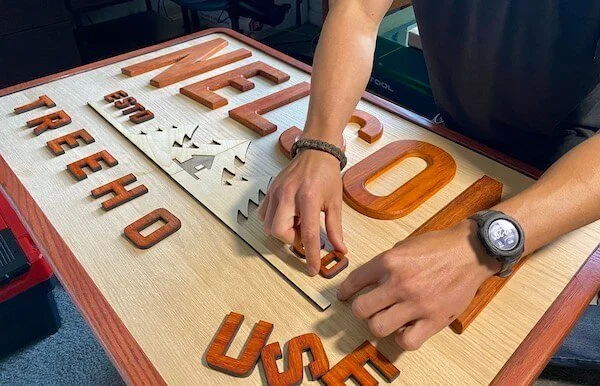
Laser cut stained oak letters, 3/8” thick
Best Wood for Laser Cutting (Top Materials Compared)
Let’s cut to the chase. You want a list of what to buy. I’ve organized these by how they perform in the real world, balancing cut quality, engrave detail, and cost.
Baltic Birch Plywood: The Gold Standard
If you ask ten laser operators for the best plywood for laser cutting, nine of them will say Baltic Birch. There is a reason for that. It uses a specific type of birch wood with very few voids (gaps) in the inner plys. This means when your laser hits it, it cuts uniformly without hitting a pocket of air or hard glue .
Best for: Boxes, signs, 3D layered art, earrings, and mechanical parts.
Pros: Strong, stable, beautiful layered edges, cuts consistently.
Cons: Getting more expensive; lower-quality knock-offs exist.
MDF (Medium Density Fiberboard): The Smooth Operator
MDF is essentially wood dust mixed with wax and resin binders, pressed into a sheet. It has no grain. Zero. This makes laser cutting plywood vs MDF an interesting debate. While plywood has structure, MDF offers perfection on the surface. It engraves incredibly smoothly because there is no grain to interrupt the burn.
Best for: Paint-grade signs, puzzles, architectural models, and prototypes.
Pros: No grain, dirt cheap, perfectly smooth engravings.
Cons: Safety Warning: The fumes are nasty (formaldehyde). You need good ventilation . Also, the edges turn very dark brown/black—almost like chocolate.
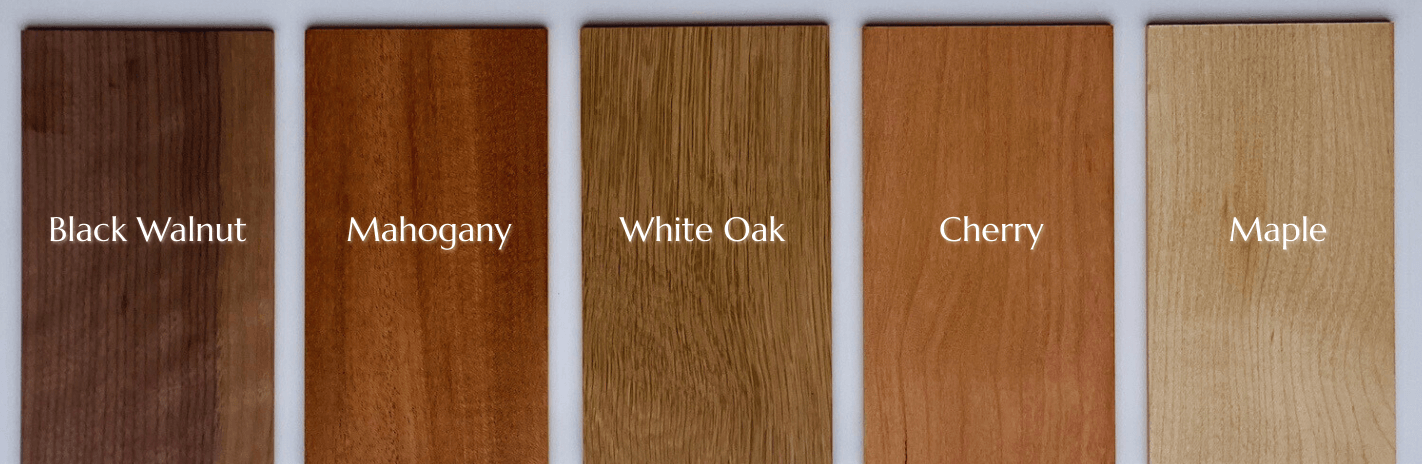
Solid Hardwoods (Maple, Cherry, Walnut, Basswood)
When you want the wood itself to be the star, you go solid.
Basswood: This is the ultimate beginner wood. It is super soft, very light in color, and has almost no grain. It cuts through like butter, even on low-power diode lasers. It’s perfect for model building and delicate ornaments .
Maple & Cherry: These are your premium engraving woods. They are hard and light-colored. When you engrave Maple, you get a beautiful, high-contrast dark brown mark that looks very professional .
Walnut: Gorgeous dark chocolate color. Engraving on Walnut is subtle—it looks less like "burned" and more like "etched" because the contrast is lower. It screams luxury for those high end pieces.
Not sure which wood species to use for the rest of your project? Check out this guide on the Best Wood Options for Indoor and Outdoor Signs.
Best Solid Woods for Laser Engraving and Cutting
Let’s dive a little deeper into the wood for laser engraving options because this is where you make your money on Etsy or at craft fairs.
1. Maple (The Contrast King)
Maple is hard, but it is worth the extra pass. Because it is so light, the laser burns a crisp, dark line that is highly visible. It is the industry standard for things like kitchen utensils, cutting boards, and awards .
2. Cherry (The Warm Favorite)
Cherry darkens naturally over time with UV light, which adds a beautiful depth to laser engraving. When you burn it fresh, you get a deep chocolate mark that will age gracefully. Just be careful—it can burn unevenly if your laser power fluctuates .
3. Walnut (The Class Act)
Walnut laser engraving contrast is unique. You don't get a "burnt" look; you get a "relief" look. The laser removes the top layer, revealing the slightly lighter wood underneath. It is subtle, sophisticated, and perfect for logos on high-end goods.
4. Basswood (The Easy Button)
If you have a diode laser (like an xTool or Atomstack), basswood laser cutting is your happy place. It requires very little power. You can cut intricate 3mm shapes in one pass at high speed with very little charring .
Woods to Avoid for Laser Cutting
Not every piece of scrap wood is safe—or effective. Here is the "Do Not Laser" list.
1. Pine and Resin-heavy Softwoods
I know Pine is cheap. But it is a nightmare. The resin heats up, turns to sticky tar, coats your lens (ruining it), and creates a flame hazard. The engraving is blotchy because the soft spring wood burns faster than the hard summer wood .
2. Oily Tropical Woods (Teak, Rosewood, Cocobolo)
These woods contain natural oils that act like lighter fluid. They can catch fire easily, and the fumes are often toxic and irritating to the lungs.
3. Pressure-Treated Lumber
NEVER laser pressure-treated wood. It contains copper, arsenic, and other chemicals designed to kill bugs. Laser vaporizing these turns them into toxic gas that will destroy your laser's optics and your lungs.
4. Low-Quality "Unknown" Plywood
If you buy the cheapest plywood at the big box store, you are gambling. Sometimes the inner glue is a plastic resin that melts instead of vaporizes, leaving a rock-hard, crusty edge that is impossible to clean.
Burn Marks and Edge Quality
Let’s talk about the "ugly." Charring. No one wants a black sooty mess.
Why does charring happen?
Charring happens when the laser moves too slowly. You are basically holding a magnifying glass in the sun too long. You are burning the wood instead of vaporizing it instantly .
How material choice affects cleanup:
MDF: Produces a lot of dust and dark edges, but it sands off easily.
Plywood: The glue layer causes the dark lines. You can’t sand them out because the glue is embedded.
Basswood: Minimal char. If you have good air assist, edges stay almost raw wood color.
Pro Tip: To prevent burn marks, use Air Assist (a jet of air at the laser nozzle). It blows the flaming gas away before it sticks to the side of your wood . Also, apply transfer tape (masking tape) to the surface before cutting; the smoke sticks to the tape, not the wood.
Whether you leave the edges charred or choose to sand them off, be sure to pay attention to What Finish to Use on the Wood.
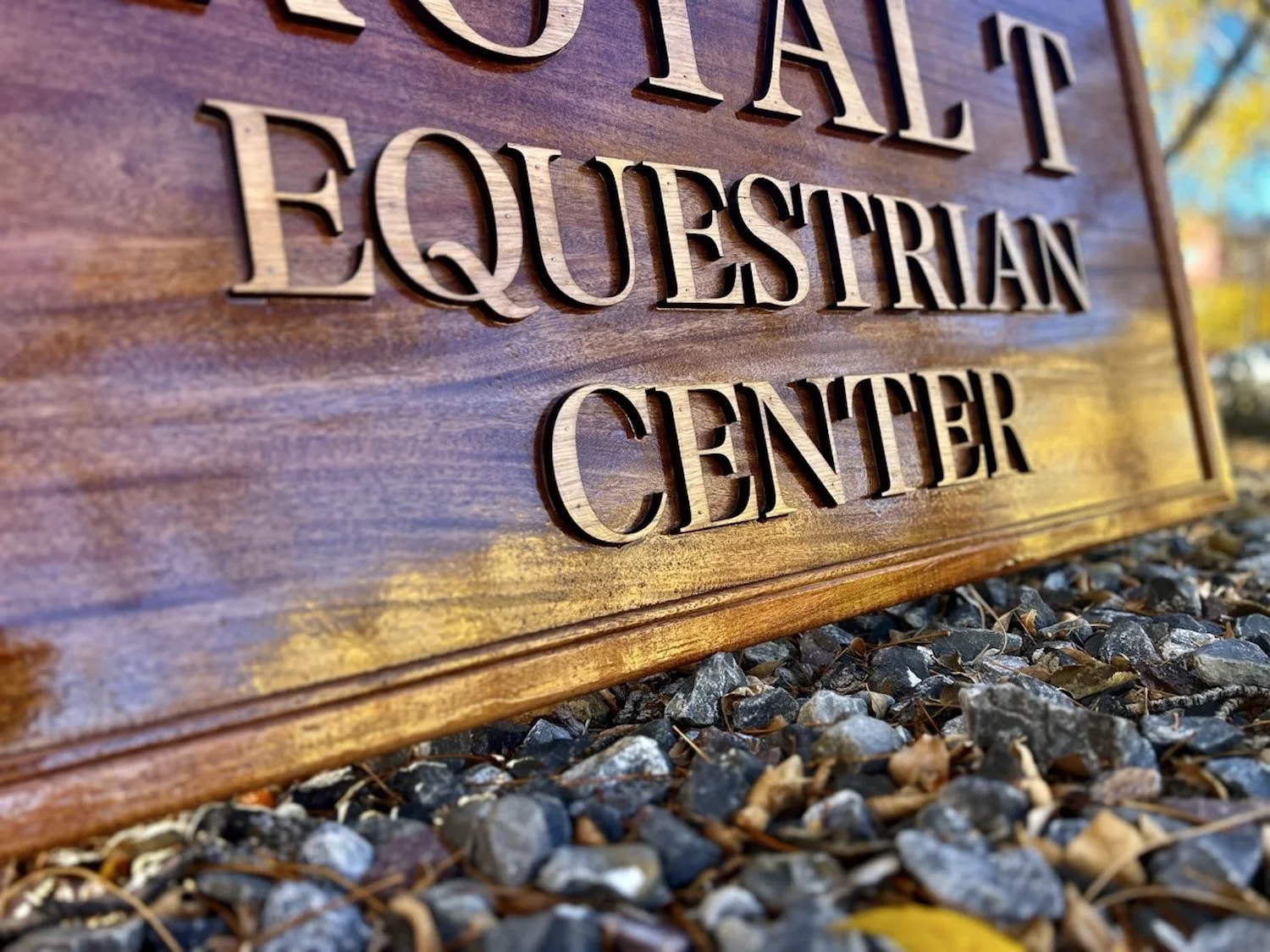
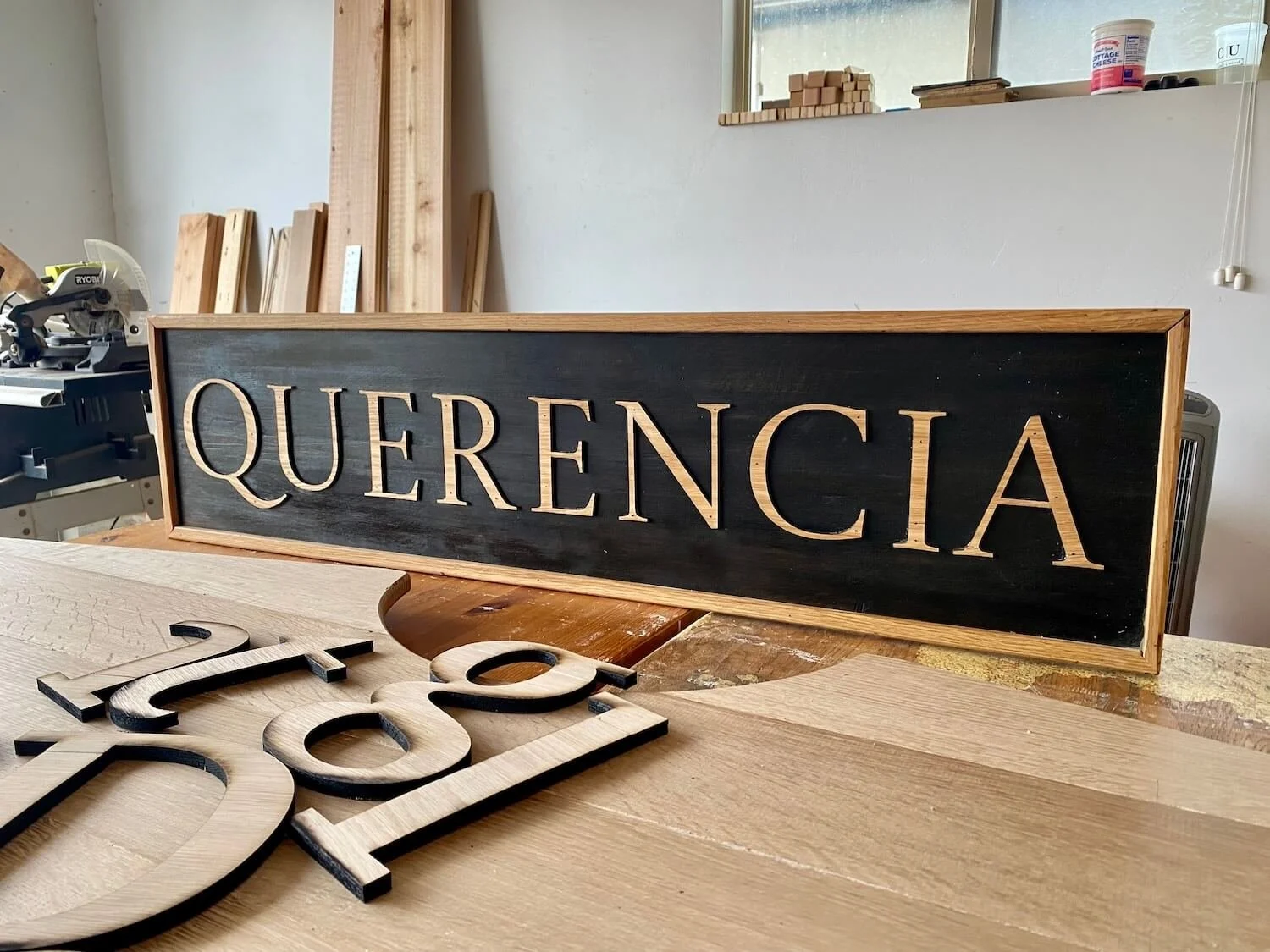
3/8” thick oak letters on mahogany
Thickness Matters: Choosing the Right Wood Size
Your machine’s power dictates your thickness limit.
Diode Lasers (5W - 10W): Stick to 3mm (1/8 inch) or less. You can push to 5mm, but it requires very slow speeds and multiple passes, which increases burn risk. Basswood is your best friend here.
CO2 Lasers (40W - 60W): Sweet spot is 3mm - 6mm. You can do 10mm in multiple passes, but the edge angle will slope.
High Power CO2 (100W+): You can slice through 12mm - 20mm solid wood like a hot knife through butter, assuming you have the right lens .
Choosing the Right Wood for Your Project
Still unsure? Here is the TL;DR based on your end goal:
For intricate jewelry or delicate ornaments: 3mm Baltic Birch Plywood or Basswood. The strength of the plywood prevents snapping, but the basswood cuts fastest.
For a rustic sign that stays natural: Walnut or Cherry. Don't paint it; just clear-coat it. Building something high end? Check out this selection of exotic wood species used by Blade & Burnish Wood Sign Co.
For a sign you are going to paint: MDF. It’s cheap, and the smooth surface takes paint perfectly.
For production (making 100 of the same thing): Baltic Birch. Consistency is key for production.
Ultimately, the best wood for laser cutting is the one that matches your machine’s power and your project’s needs. Don't be afraid to buy a variety pack of samples. Test the speed and power settings, see how much they smoke, and see how they sand.
Trust me, once you dial in the settings on a beautiful piece of Cherry or a crisp sheet of Baltic Birch, you’ll never go back to burning pine again. Happy lasering!
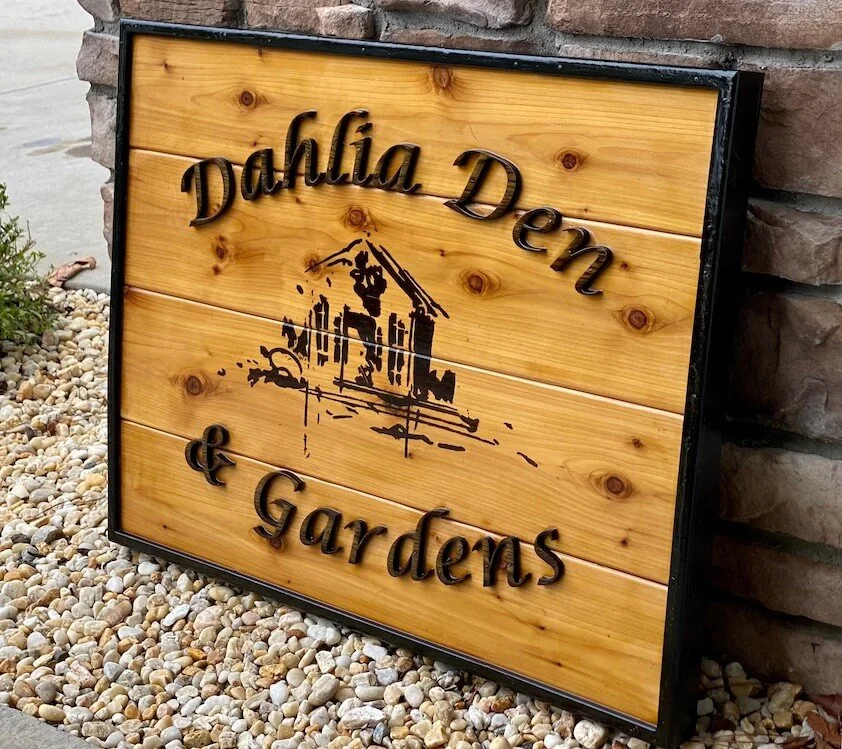
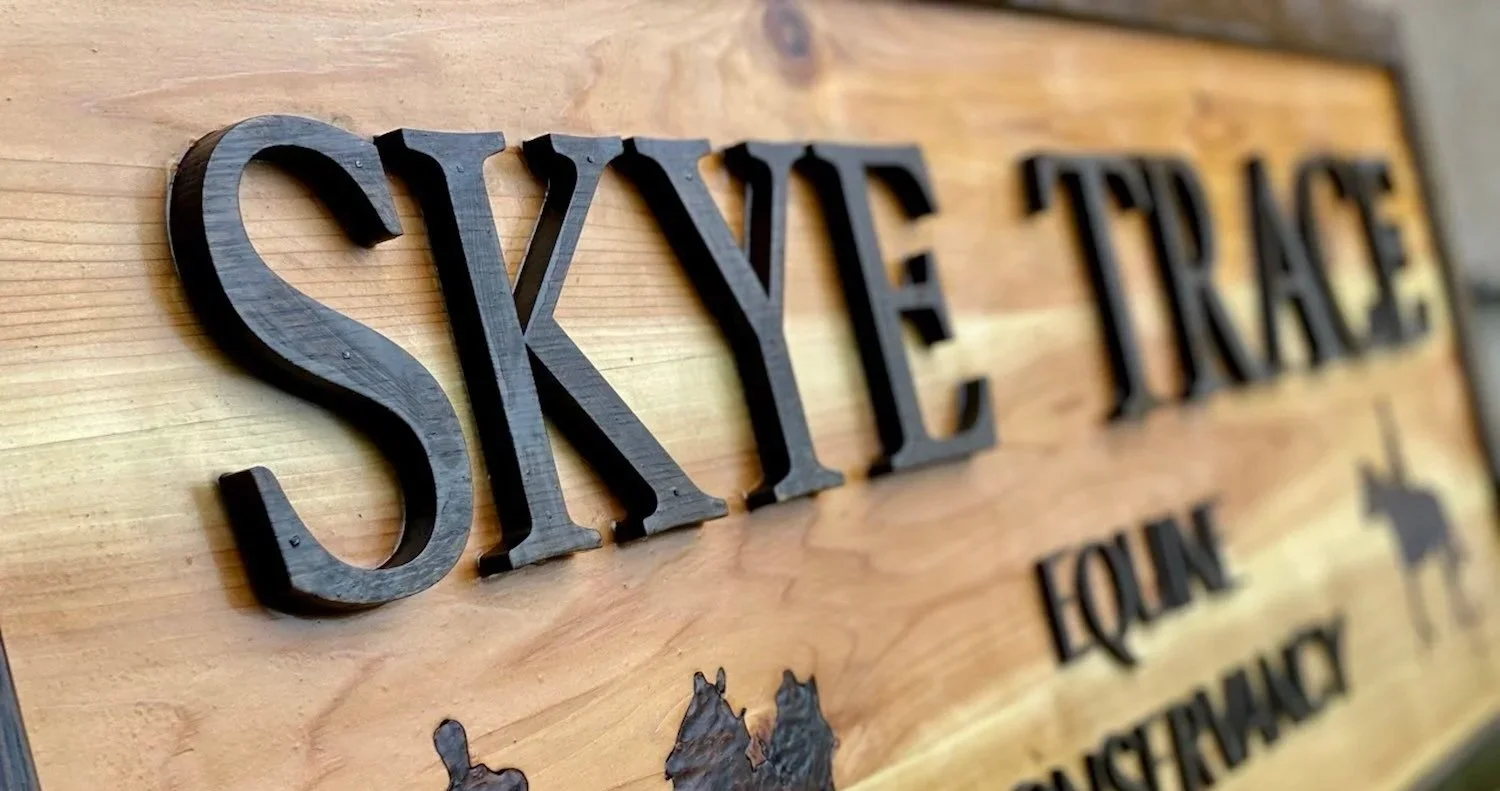
Stained oak letters on a cedar sign
Interested in seeing other sign builds by Blade & Burnish? Check out our gallery here.
Related Readings: