

Blade Bonaduce: Fine hardwoods, fine signage
Published by SignCraft Magazine Posted on Monday, July 20th, 2026The following article was written by SignCraft Magazine and is republished here with permission. Many thanks to the SignCraft team for featuring my work.
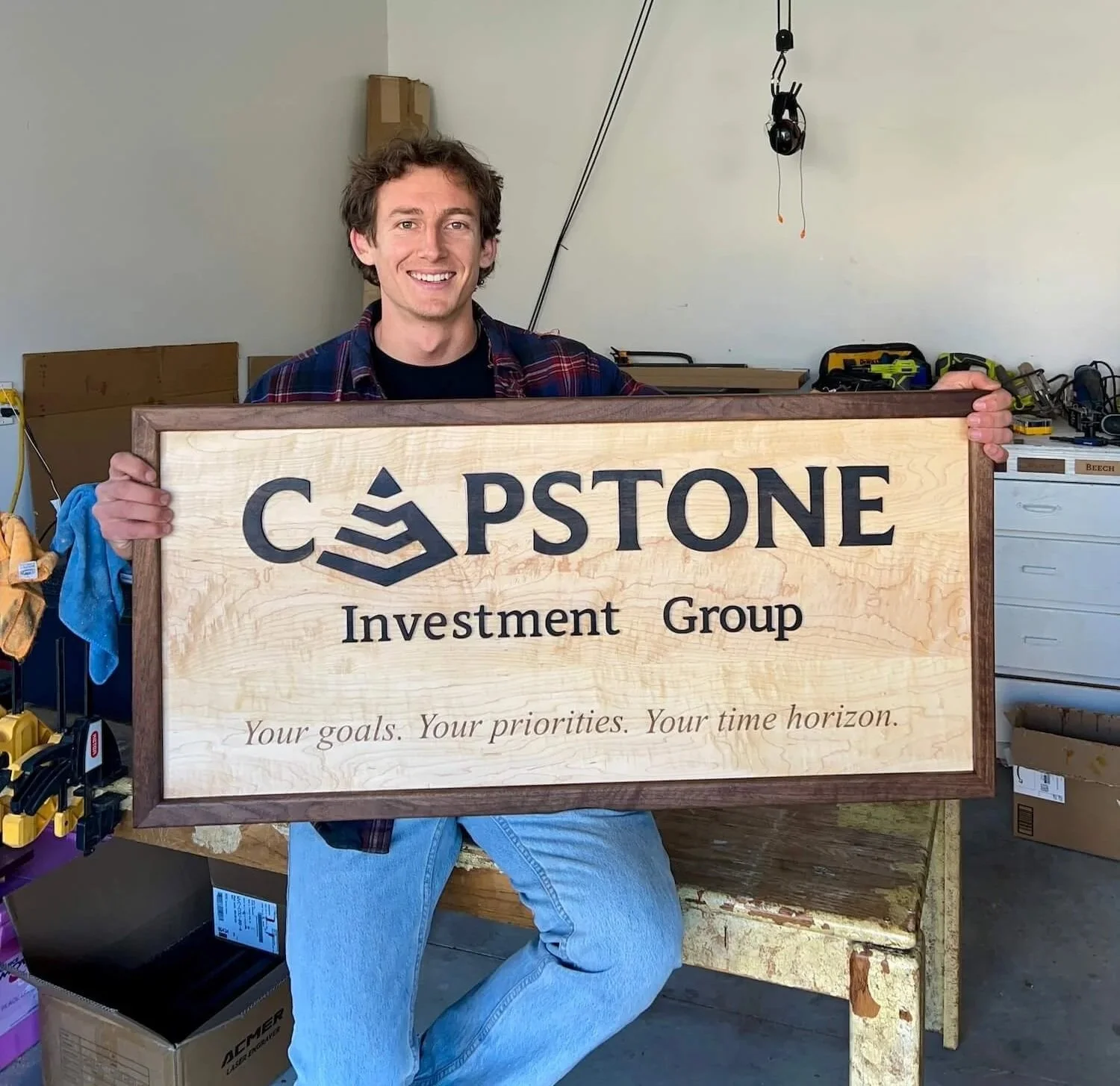
Wood has been a material of choice for sign making for centuries, but you don’t often see fine hardwoods and clear finishes used for a sign. That’s the look that appeals to Blade Bonaduce, though, and he’s building a sign business devoted to that very unique type of sign production. His shop, Blade & Burnish, is in Salt Lake City, Utah, but his clients—and his signs—are scattered across the country.
Blade was a cabinet maker when he got the notion of making signs from fine hardwoods and natural finishes. Going on the positive reactions to those early sign projects, he shifted his focus from woodworking to sign making, opening his business in 2024.
He works out of a 1200-sq.-ft. well-equipped wood shop with two laser cutters/engravers: an xTool S1, 40-watt and an ACMER S2 Pro. Most of his work days are divided in two, with about half the day spent at the computer, creating layouts, communicating with customers, setting up the job for the router, and doing all the “back end” work that goes with being in business—emails, invoices, ordering materials. The other half of the day is spent in the shop, making furniture-grade signs.
Here’s what he told SignCraft recently about his work and his business:
His roots: I was into woodworking and art ever since I was young. Eventually I served an apprenticeship as a cabinet maker and worked at that. Making wood signs seemed like a natural way to go down from there so I made a few, then a few more. Next thing you know, I’m doing them every day. I’m just applying what I had learned about working with hardwoods to sign making.
His niche: One of the things that led me into making signs out of fine hardwoods is the fact that there aren’t many doing it. That creates a niche for me. For the most part, the sign industry has gone to HDU board for 3D signs because wood can be pretty unpredictable. Wood can warp and it doesn’t last as long as HDU board. It requires more maintenance, too.
But my business model is built around the unique beauty and qualities of wood. It’s real hardwood and it will behave differently than HDU board. You have to be prepared for that, and it’s something I explain to every client. They will have to do maintenance and it does have a “shelf life.” But in return, many people do appreciate the natural beauty of real wood, and there does seem to be market with those who want the real thing.
Interior/exterior: My work is about a 50/50 split of interior and exterior work. For interior signs, I work with 20-some different wood species. I use the natural color of the species—no paint or stain unless the customer insists on it. I prefer to let the natural color of the wood provide the contrasts.
For outdoor signs, I limit it to three species—cedar, white oak and mahogany. They are naturally more weather resistant. I also use quarter sawn wood for outdoors. Because of the way it is milled, it’s more stable than flat cut wood, which is more common.
This type of work is a natural for lobby signs and other work where viewers can appreciate the graphics up close. I’ve always enjoyed making indoor signs a little more than outdoor ones. You can get a little more creative with the choice of wood and the amount to detail in the sign.
The lifespan is at least double that of an outdoor sign, too. I tell clients that an outdoor sign can last 10 to 15 years with proper maintenance. Indoors they can last 25 or 30 years or even more.
Working with lasers: I use two types of lasers. With the xTool S1 40 watt unit, I can put the wood inside of the machine for cutting. ACMER S2 Pro is an open-bed unit where I can put the laser over the wood panel for engraving. With careful alignment, I can engrave a section of the sign, move the machine a couple feet, then continue the engraving and have it all line up.
The 40-watt laser can cut wood up to about 3/8-in., depending on the species. If I am doing something thicker than that, I cut multiple pieces at 3/8-in., laminate them together, then sand the edges.
The laser leaves a charred black edge, which for some pieces I leave as is, since it adds depth and shadow to the letters. This usually fits rustic looking signs quite well. For other pieces, I’ll hand sand or use a Dremel hand grinder to clean off the char from the letter edges and expose the natural wood grain.
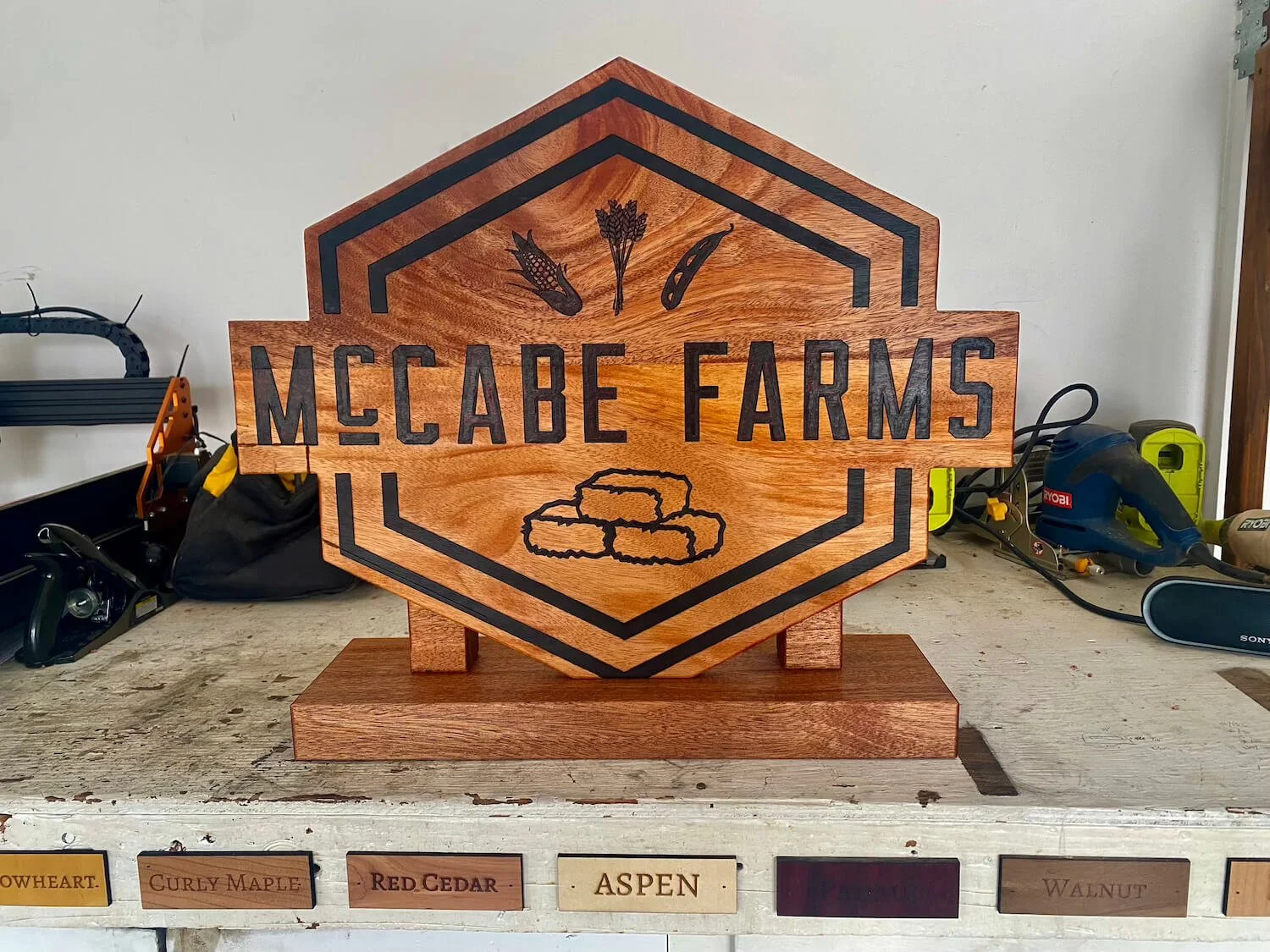
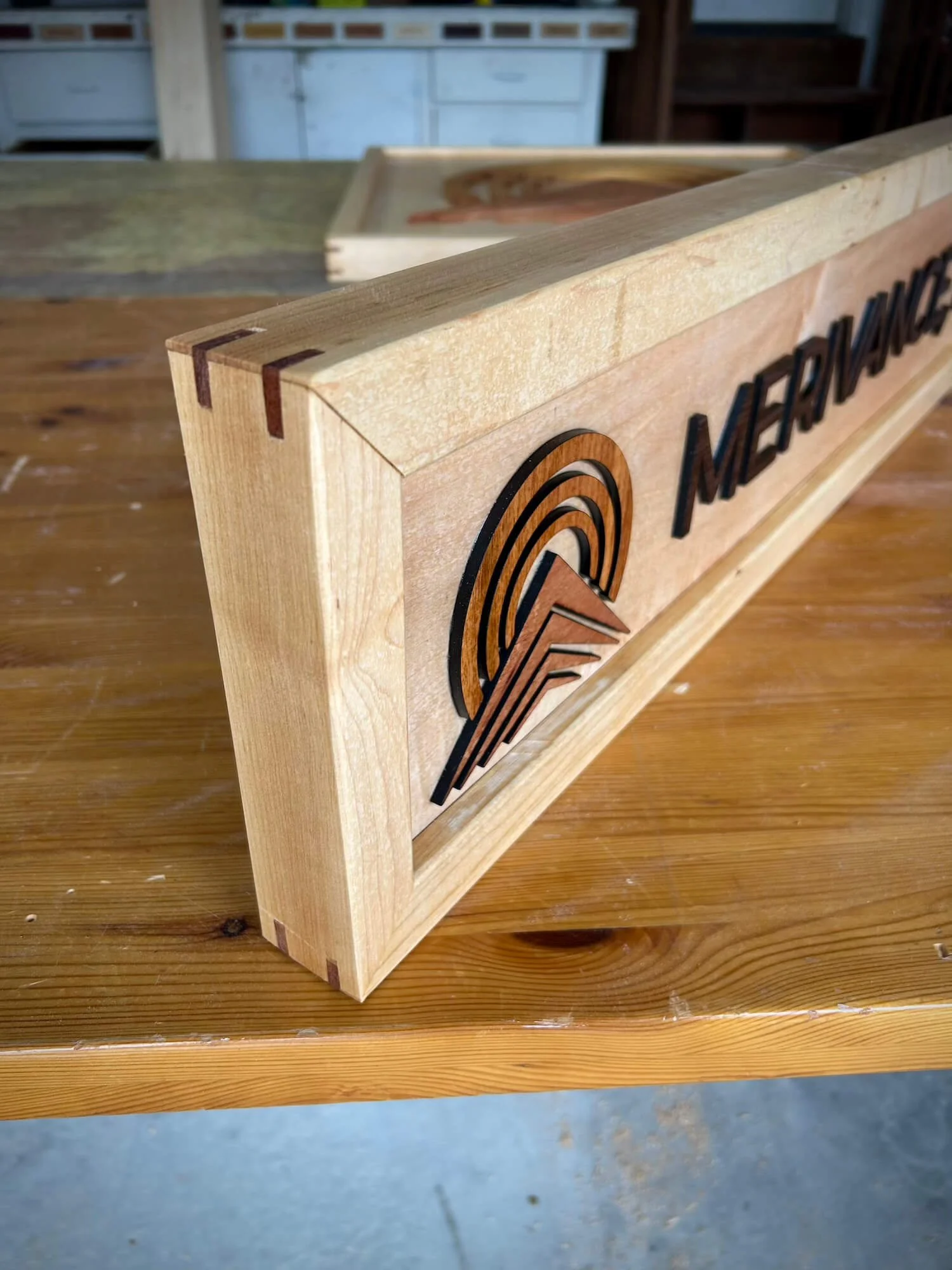
Choice of finishes: One factor that influences the finishing is how much maintenance the customer is willing to provide. If they can do it once or twice a year, we go real simple. We use teak oil then they can just reapply it periodically to rehydrate the wood. It’s just wipe-on and wipe-off. If they do that, the wood won’t bleach out to gray.
How much weather the sign gets is also a factor. I always ask which direction the sign faces and if there is any protection over it. A southerly facing sign may need maintenance twice as often as one facing north. Most folks think it’s the rain and snow that will age the wood, but it’s really the UV damage from the sun.
Marketing his work: Early on, I thought social media would be the way to reach customers whom my type of high-end work would appeal to. I realized, though, I wasn’t going to sell a sign to someone who was just scrolling through their feed and somehow convince them to spend several thousand dollars on a wood sign. It’s more a matter of getting people to search for me.
So I shifted my approach and spent a lot of time making myself as searchable as possible—the SEO stuff, the backlinks and all that. Now I only do Google Ads rather than on Instagram or Facebook. It gives me control over the workload, too.
When you work alone, you can only do so much each week. If I’ve got plenty of work coming in, I can just turn off the ads for a while so that I can catch up. When I need more work, I turn the ads back on. It’s working pretty well. Word of mouth and returning customers helps, too, and that is picking up as time goes on and I get more work out there.
Sourcing materials: I buy some of the wood locally here and there, but most of the time, the quality doesn’t match what I can get from a company in Michigan that specializes in quality hardwoods. Of course, there’s a lot of shipping costs because wood is heavy, and there is a time delay because it can take two or three weeks to get materials for a project.
That’s something I explain to customers up front. This type of sign work takes time. If they’re on a tight schedule, I’m probably not the person for the job. I take my time doing things, and the signs take as long as they are going to take.
I finish the sign panel carefully, front and back. When it comes time, I choose the better side for the front, but I also add the information about the sign on the back—who made it, what materials were used, and even a print of the design drawing. Few may ever see that, but it adds to the impression of the quality of the product.
Burning for effect: I often use wood burning in my work. I first did it while growing up, and I find it’s a great effect to use on my signs. I can add contrast and detail with it. On rustic signs, I use a blowtorch to blacken letters or sections for the background. I use metal rulers or paint scrapers to protect areas then use the torch to burn a border or a section. I can occasionally get the customer to lean into a sign that has a completely burnt background. I like that look of charred wood a lot. Maple, cedar and basswood all char very well. Charred wood is also more weather- and water-resistant, so that’s a bonus.
I’m not making signs for every purpose for every customer. I realize I have a small audience. But this is the work that I love doing, and I think that my customers pick up on that. These are signs with a very unique look that speaks of quality and permanence. They rely on the beauty of fine hardwood for that, and they’ll last for years.
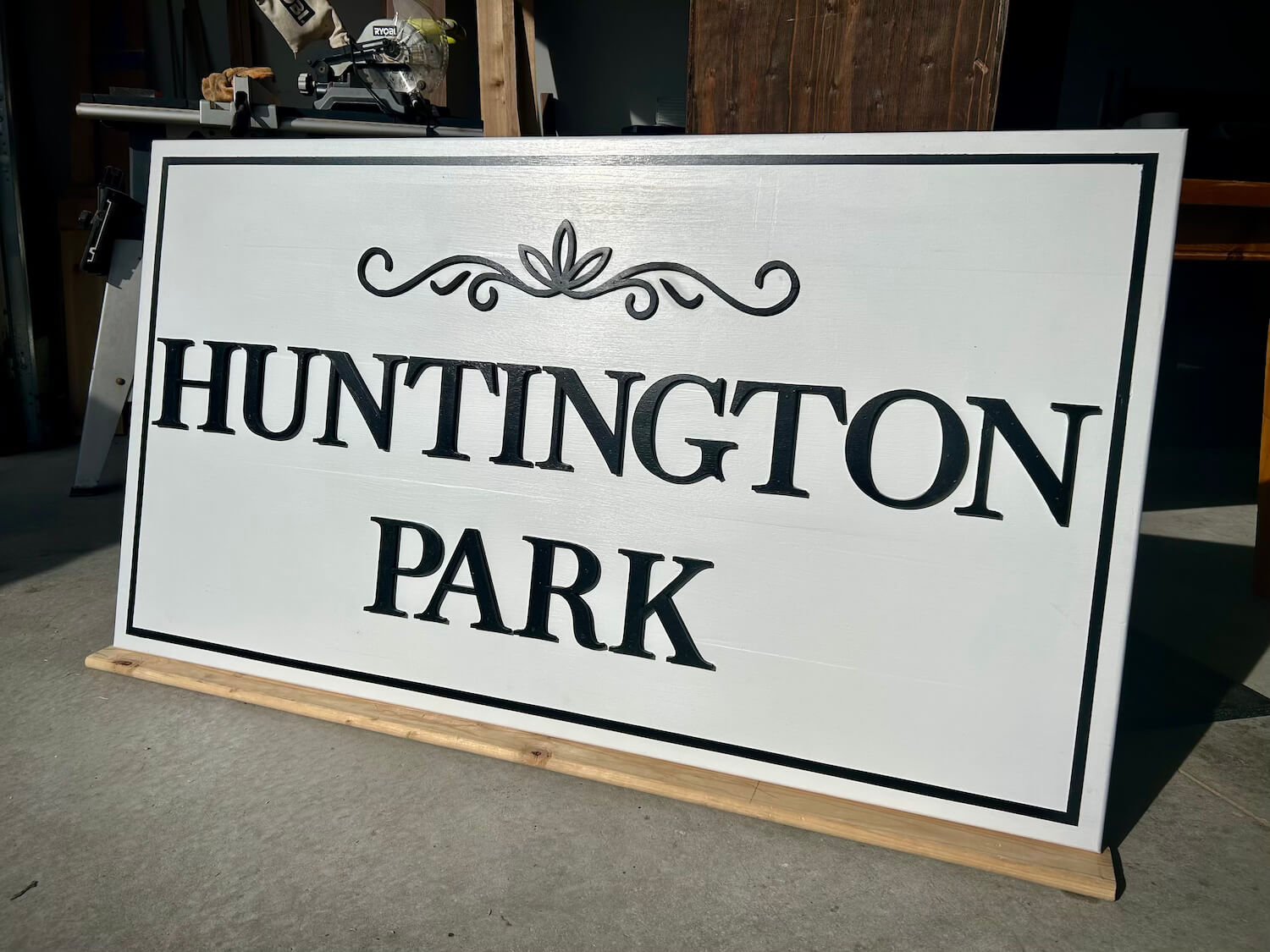
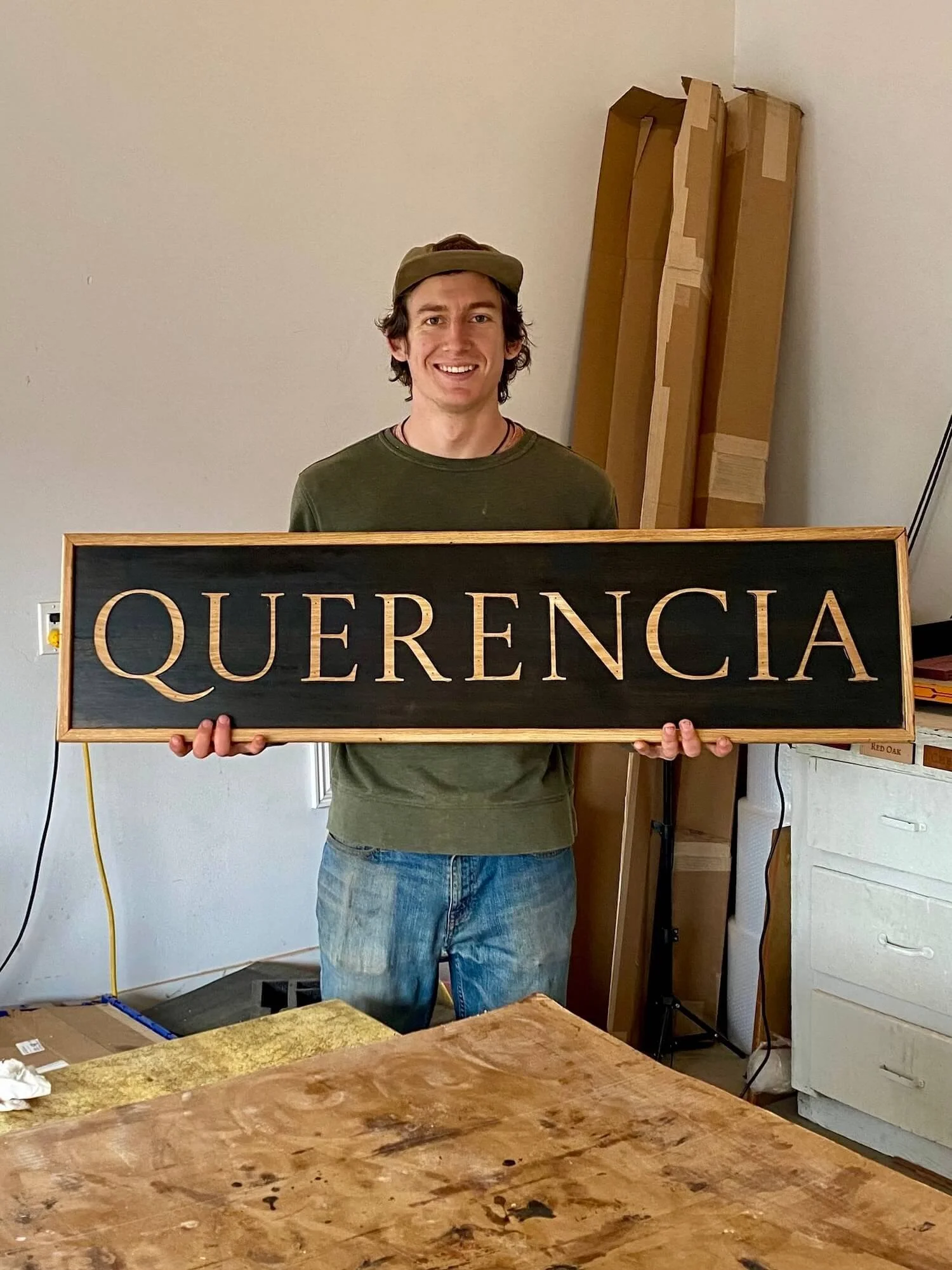

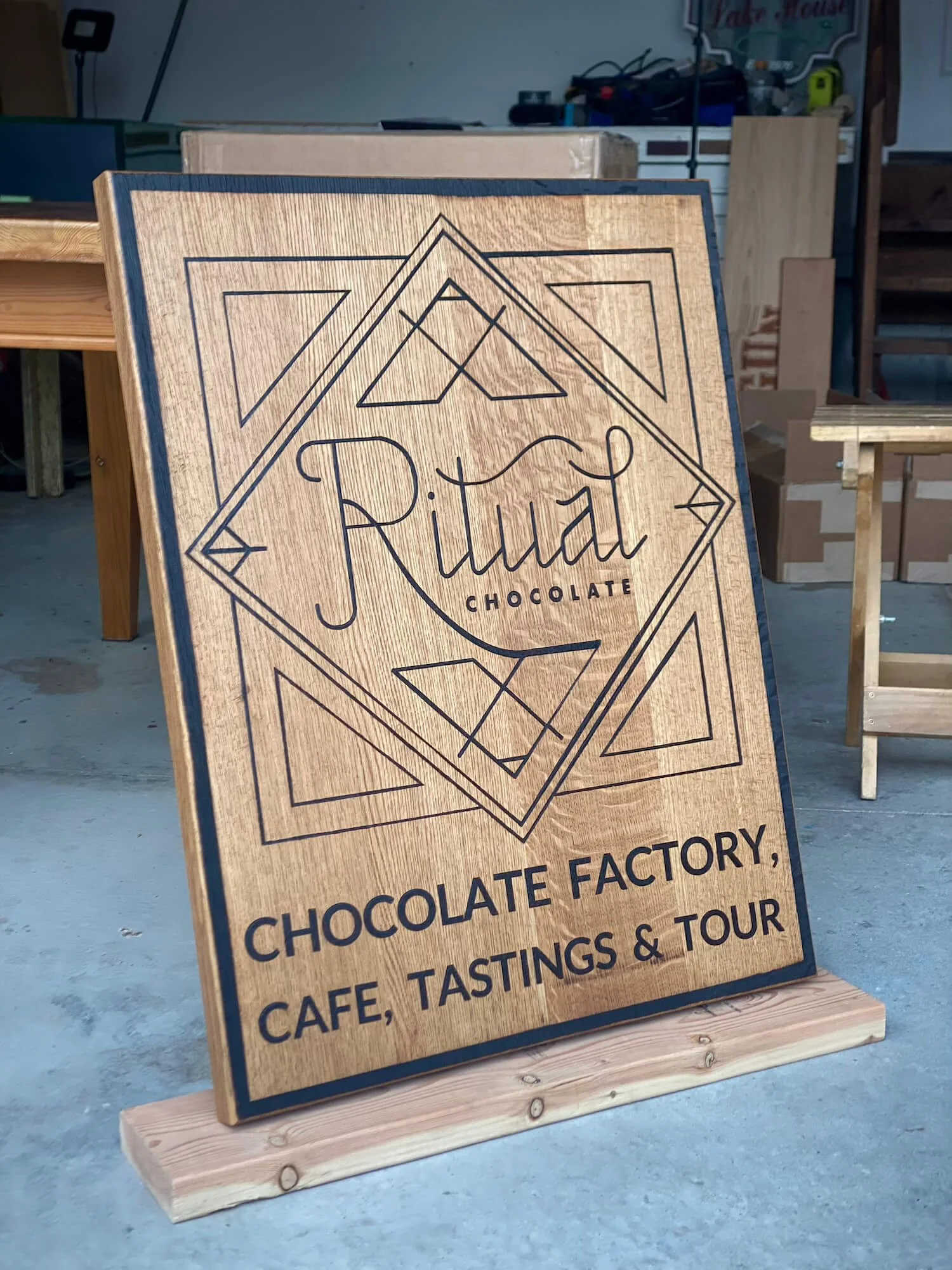
To see more of Blade's work, visit the Blade & Burnish gallery here.